Sunday, March 8, 2015

You can Turn Your Smartphone into Mouse To Control your PC

watching videos on your PC in bed. Or, playing loud music at a party in your house? These are few situations where a smartphone turned remote mouse plays its role. Let me tell you another killer situation- What about delivering a presentation and you need to change the slides?
You might be thinking that it’s a difficult task to convert your smartphone into mouse but let me tell you, it’s not that tough. All you need is to install a small app Remote Mouse on your smartphone and follow some small instructions to do that. There are free and paid pro versions of Remote Mouse, but currently the paid version is being offered for free.
Take a look at these simple steps and convert your smartphone into mouse with ease:
Step 1:
Download and install the Remote Mouse app by following these links: AndroidWindows Phoneipad, iPhone/ipod.
Step 2:
Now download and install its companion Remote Mouse server application for Mac or PC from here.
Step 3:
Now you need to connect your device and computer to the same Wi-Fi network.
Step 4:
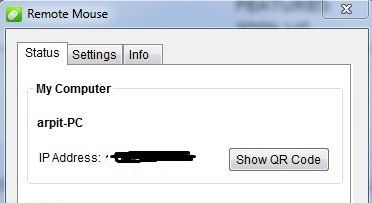
You can easily find IP address and QR code by opening the Remote Mouse app in your computer.
remote-mouse-pc
Step 5:
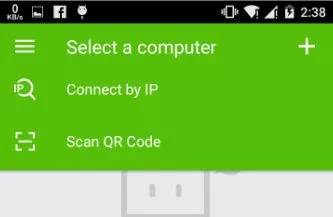
Open Remote mouse on your device and connect it to PC by feeding it with IP address or QR code.
remote-mouse-pc

Step 6:
Once everything is done, you will find that it is very easy and fun to navigate your PC with your device.
phone-remote-mouse

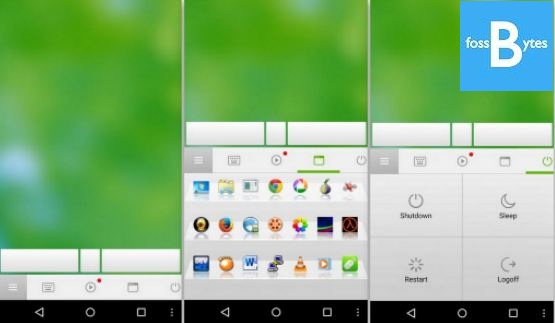
Remote Mouse will seem familiar to Mac users because it gives the same feel to a MacBook’s multi-touch trackpad. Here one-finger tap is left click and two-finger tap is the right click. You can scroll and pinch to zoom using two fingers. The mouse speed could be adjusted in the app settings.
Also, there are different panels in the app. Dock panel lets you switch apps, media panels lets you control the playback at different applications. Other common panel features include shutdown, sleep, logoff and restart. Watch the video below top know more:

Wednesday, February 18, 2015

The our best 12 Volt battery charger circuit, this is a charger circuit automatic system, then when the battery voltage is lower than specified, this circuit provides power to the battery immediately and stops charging when the battery is fully only. So ideal for use in emergency power supply or battery backup power system at all type. And certainly, if you apply to your car battery, it does not have any rules.
And the most important is the price that was really very. we will quickly build is available.
*** Note: Though This project is good but it may difficut to build and expensive. I love this projects better : Simple auto cut off 12V battery charger
How this circuit works
From the circuit will be seen that, in the heart is IC1 op-amp no.LM311. Which it is connected be the compared circuit. Usually the voltage at pin 3 will be equal to 6V with the Zener diode ZD1-6V.
While the battery has a voltage charged in full. The output voltage at pin 6 to negative voltage across the Zener diode, go to make the transistor BC337-Q1 and The Relay-RY1 does not work as well. So The AC voltage input to the transformer-T1 will be cut off.


The reduction of the battery voltage will be make voltage at pin 2 of IC1 is lower than at pin 3, This makes style voltage at pin 6 of IC1 to positive and if it is higher than 3.3V, it will result in the base current (Ib of Q1) enter biased to Q1 doing and the relay also work, to contact of relay will connected the ACV to the transformer T1 so has the secondary coil ACV to a bridge circuit BD1 to DCV (15Vdc) and across drop at C1-1,000uF for filter signal full wave rectifier form, to the charging battery system again.
Until the voltage battery full will makes pin 2 of IC1 is positive when compare with voltage at pin 3, This circuit will cut off the current that charge battery at once, and begin renew charge again when voltage lower than you setup.
The component lists
IC1-LM311___Comparator Single ±15 Volt 30 Volt 8-Pin Plastic Dip Rail
Q1_____BC337___45V 0.8A NPN transistor
RY1____Relay 12V—5A contact.
C1_____1000uF 35V electrolytic capacitors
C2,C3_____0.1uF 50V Ceramic capacitors
R1,R3,R5_____22K____0.5 watts resistors
R2_____18K_________”_______”
R6,R7_____1K _________”_______”
R4_____150 ohms _________”_______”
T1___Transformer 3A–12V
The creation and setting circuit
You put all components with circuit diagram shown in figure below correctly, Determine the order of the components and the polarity of the diode and the electrolytic capacitor is connected correctly or not. When done well, to try connected the power supply adjustable voltage output enter the connector for charge battery.
Note : Do not plug the AC power of this project and plug the battery.


Friday, May 9, 2014

How to recharge startimes

How to Recharge your Startimes Decoder
How to load the Recharge card:
Using Smartcard Number
1. Scratch the foil to reveal the 16 digit PIN number
2. Enter CC#Smart Card Number#Repeat Smart Card
Number#PIN
3. Send as SMS to 32020.
4. You will receive an SMS about the recharge whether
it is successful and your current balance.
Note: find the Smart Card number on the Smart
Card Inserted in your Video Gateway
Note:
• Recharging your Smartimes Decoder can be done
using your mobile phone.
• Mtn network is advisable. Cost of SMS is N30.
• Leave no Space in between SMS
• Make sure you do not end your SMS with #
• You will receive an SMS about the recharge whether
it is successful and your current balance.
• To check balance: Enter: BQ#Smart Card Number# OR
BQ#Customer Code# send as SMS to 32020
• Do not discard your recharge card unless you have
received an SMS confirming that this card has been
utilized.

Tuesday, March 25, 2014

NEDEP

PRESIDENT Goodluck Jonathan, on Tuesday, formally
launched the Nigeria Industrial Revolution Plan (NIRP)
and the National Enterprise Development Programme
(NEDEP), two policies he was confident would
accelerate inclusive growth and job creation in the
country.
Performing the ceremony in the Banquet Hall of the
Presidential Villa, the President observed that a great
economy must be based on a solid industrial sector
with well diversified minds and sources of revenue, as
well as a vibrant micro and small medium enterprise
sector to create jobs and provide leverages.
According to him, the NIRP and NEDEP would help to
fast-track the attainment of these goals as they were
targeted at transforming Nigerian businesses and
improving the living standard of the ordinary people.
He added: “It will accelerate inclusive growth and job
creation and save the drain on our reserve caused by
importing what we can produce locally.
“The Nigeria Industrial Revolution Plan, the National
Enterprise Development Programme will also impress
impetus for our National Transformation Agenda by
ushering in a new era of value addition, enterprise
development and industrialisation.”
Jonathan expressed his belief that the Nigerian
economy must be developed and that was why his
administration had been resolute in executing the
Nigerian agenda for economic reform.
He highlighted some of the successes recorded by his
administration so far, saying, “our track record in this
regard is strong every year. Just coming into office, we
have consolidated Nigeria’s fiscal position. We have
launched the boldest transformation of the agricultural
sector and we are on the way to increasing Nigeria’s
food production by 20 million tonnes per annum.
“Among other significant achievements, we have
fundamentally reorganised the power sector by
privatising 11 distribution and four generating
companies and bringing in the private sector capital
and expertise.
“We have upgraded facilities within the Nigerian
aviation sector to standards never seen before in this
country and we have started rail services that have
been dormant for over 20 years.
Our road network has also received unprecedented
attention and improvement in the last three years,” he
said.
While hoping that the NIRP and the NEDEP would
would be major additions to these landmark
achievements, the president observed that the NIRP,
which he said was the most ambitious industrialisation
programme ever pursued in Nigeria, would accelerate
areas where Nigeria has comparative and competitive
advantages, such as the processing of food and
agricultural products, metals, solid mineral processing
and Nigeria-related industries and construction like
manufacturing services.
He explained that these sub-sectors were prioritised
because they would also generate jobs and tap into
existing markets and demands in Nigeria, saying, “in
each of these sectors, we could become number one in
Africa and in the top 10 globally because of our
competitive advantage.”
Similarly, he said the NIRP would also address the
problem that had persistently limited manufacturers
and build up industrial infrastructure, prioritise power
for industrial use, reduce borrowing cost and mobilise
funds to the real sector.
“The benefit of NIRP will boost the annual revenue
earned by Nigerian manufacturers by up to N5 trillion
per annum,” he stated.
In his remark on the occasion, Governor Olusegun
Mimiko of Ondo State lauded Jonathan for his policies,
which he noted had transformed various sectors of the
country, adding, therefore, that it would be a
herculean task for any opponent who wanted to
challenge the president in the 2015 presidential
election.
Mimiko noted that whoever wanted to challenge
Jonathan should be prepared to show the alternative
policies to the ones the president had pursued with
“single mindedness,” with outstanding success.
However, he reminded Jonathan that he would criticize
him constructively when the need arose, adding, “I
can assure you I will not write you any letter.”
Also speaking, Governor Peter Obi of Anambra State
similarly commended the president for his political will
to implement policies, some of which, he observed,
had been in existence but only in the archives.

Thursday, March 20, 2014

Solar technology

The research team at the University was searching for materials, which can be arranged in ultrathin layers and also have better electronic properties than Graphene. They found out that tungsten diselenide consisted of one layer of tungsten atoms, which are connected by selenium atoms above and below the tungsten plane. It can also absorbs light, which can be used to create electrical power.The solar cells in use today are mostly made using silicon and are therefore very heavy and inflexible. According to Professor Thomas Mueller, who is a team member in this research, the electronic states ingraphene are not very practical for creating photo voltaics. In tungsten diselenide, the layer is so thin that 95 per cent of the light passes through it. And a tenth of the remaining five per cent, is absorbed by the material. It is then converted into electrical power.Thus, the internal efficiency is very high. The team believes that the applications lie in solar cell layers on glass facades, which let part of the light into the building while at the same time creating electricity.PrintEmailPost Comment

Thursday, March 13, 2014

Internet trick

How To Hack Satellite Internet & Surf Anonymously
1 Comments
A Spanish researcher demos new satellite-hijacking
tricks with cybercriminal potential.
Satellites can bring a digital signal to places where the
Internet seems like a miracle: off-the-grid desert solar
farms, the Arctic or an aircraft carrier at sea. But in
beaming data to and from the world’s most remote
places, satellite Internet may also offer its signal to a
less benign recipient: any digital miscreant within
thousands of miles.
In a presentation at the Black Hat security conference in
Arlington, Va., Tuesday, Spanish cybersecurity
researcher Leonardo Nve presented a variety of tricks for
gaining access to and exploiting satellite Internet
connections. Using less than $75 in tools, Nve, a
researcher with security firm S21Sec, says that he can
intercept Digital Video Broadcast (DVB) signals to get
free high-speed Internet. And while that’s not a
particularly new trick–hackers have long been able to
intercept satellite TV or other sky-borne signals–Nve
also went a step further, describing how he was able to
use satellite signals to anonymize his Internet
connection, gain access to private networks and even
intercept satellite Internet users’ requests for Web pages
and replace them with spoofed sites.
“What’s interesting about this is that it’s very, very
easy,” says Nve. “Anyone can do it: phishers or Chinese
hackers … it’s like a very big Wi-Fi network that’s easy
to access.”
In a penetration test on a client’s network, Nve used a
Skystar 2 PCI satellite receiver card, a piece of hardware
that can be bought on eBay ( EBAY – news – people )
for $30 or less, along with open source Linux DVB
software applications and the network data analysis or
“sniffing” tool Wireshark.
Exploiting that signal, Nve says he was able to
impersonate any user connecting to the Internet via
satellite, effectively creating a high-speed, untraceable
anonymous Internet connection that that can be used for
nefarious online activities.
Nve also reversed the trick, impersonating Web sites
that a satellite user is attempting to visit by intercepting
a Domain Name System (DNS) request–a request for an
Internet service provider (ISP) to convert a spelled out
Web site name into the numerical IP address where it’s
stored–and sending back an answer faster than the ISP.
That allows him to replace a Web site that a user
navigates to directly with a site of his choosing,
creating the potential for undetectable cybercrime sites
that steal passwords or installs malicious software.
In his tests on the client’s network, Nve says he was
also able to hijack signals using GRE or TCP protocols
that enterprises use to communicate between PCs and
servers or between offices, using the connections to
gain access to a corporation or government agency’s
local area network.
The Barcelona-based researcher tested his methods on
geosynchronous satellites aimed at Europe, Africa and
South America. But he says there’s little doubt that the
same tricks would work on satellites facing North
America or anywhere else.
What makes his attacks possible, Nve says, is that DVB
signals are usually left unencrypted. That lack of simple
security, he says, stems from the logistical and legal
complications of scrambling the signal, which might
make it harder to share data among companies or
agencies and–given that a satellite signal covers many
countries–could run into red tape surrounding
international use of cryptography. “Each [country] can
have its own law for crypto,” says Nve. “It’s easier not
to have encryption at the DVB layer.”
Nve isn’t the first to show the vulnerability of
supposedly secure satellite connections. John Walker, a
British satellite enthusiast, told the BBC in 2002 that he
could watch unencrypted NATO video feeds from
surveillance sorties in the Balkans. And the same lack of
encryption allowed insurgents to hack into the video
feed of unmanned U.S. drone planes scouting
Afghanistan, the Wall Street Journal reported in
December.
In fact, the techniques that Nve demonstrated are
probably known to other satellite hackers but never
publicized, says Jim Geovedi, a satellite security
researcher and consultant with the firm Bellua in
Indonesia. He compares satellite hacking to early phone
hacking or “phreaking,” a practice that’s not well
protected against but performed by only a small number
of people worldwide. “This satellite hacking thing is still
considered blackbox knowledge,” he wrote in an e-mail
to Forbes. “I believe there are many people out there
who conduct similar research. They may have some cool
tricks but have kept them secret for ages.”
At last year’s Black Hat D.C. conference, British
cybersecurity researcher Adam Laurie demonstrated how
he intercepts satellite signals with techniques similar to
Nve, using a DreamBox satellite receiver and Wireshark.
But Nve argues that his method is far cheaper–Laurie’s
DreamBox setup cost around $750–and that he’s the
first to demonstrate satellite signal hijacking rather than
mere interception.
“I’m not just talking about watching TV,” says Nve. “I’m
talking about doing some very scary things.”
At 12:57 PM, satellite_hacker said…
Satellite hacking for fun isn’t cheap! One of the sessions
I was really looking forward to ahead of the Black Hat
DC event this year was Adam Laurie’s session titled –
Satellite Hacking for Fun and Profit.
It’s a session that didn’t disappoint, Laurie is always
entertaining, but it also revealed how much effort is
actually required to try and get at satellite signals.
First off, Laurie prefaced his talk by noting that he
wasn’t going to talk about hacking the actual satellite in
space itself.
“I’m playing it safe and just looking at what is coming
down,” Laurie told the Black Hat audience.
Instead what Laurie focused his talk on was something
he called ‘Feed Hunting’ – that is looking for satellite
feeds that are not supposed to be found. Laurie claimed
that he has been doing satellite feed hunting for years –
at least as far back as the untimely demise of the late
Princess Diana in 1997. Laurie claimed that he was able
to find a non-public feed from a TV broadcaster that had
left their transponder on in a Paris hotel room.
Fast forward a dozen years and Laurie commented that
the technology to identify satellite feeds has progressed
dramatically. Among the reasons why he satellite feed
hunting has gotten easier is an open source based
satellite received called the dreambox.
Laurie explained that the dreambox has a web interface
that makes it easier to find streams and provides
information on what the stream includes. Another open
source technology also helps to feed hunt satellite
content.
A project called dvbsnoop is a DVB (dIgital video
broadcasting) and MPEG stream analyzer that lets the
user access raw data from DVB card. By sifting through
the raw data, Laurie demonstrated that interesting
satellite feeds that weren’t intended to be public could
be found.
Going a step further, Laurie claimed that he had created
his own python based script called dreaMMap that could
create a 3d model of satellite frequency transmissions.
With the 3D model the user just does a point and click
to steer dish to a particular satellite frequency. One
memory of the Black Hat audience asked Laurie if what
he was doing was legal. Laurie shrugged and
commented:
“I’m in the US giving a talk where I’m tunneled to my
server in the UK and looking at a satellite in space that
is over Africa – so who would get me?”
All told there is a financial cost to Laurie’s satellite feed
hunting techniques – and that cost is approximately
$785 for the Dreambox hardware, the actual satellite dish
and then the motor and the mount for the dish. Well I
guess if you’ve got the money to burn…
SOURCE: Satellite Internet Blog
Related posts:
More Related Post on Sidebar
1. How to secure your computer and surf fully Anonymous
BLACK-HAT STYLE
2. Hack Like a Pro: How to Exploit and Gain Remote Access
to PCs Running Windows XP
3. How We Found the File That Was Used to Hack RSA
4. Timelapse: A Satellite’s Trip Around the World
5. Internet Giants Enlisted for Government Surveillance
By Archive
Saturday, February 22, 2014

Whatapp update for February 2014

Whatsapp download link thru 3rd party before its official release. ( It is thirty party app once official will come this will be offline ) Download http://ow.ly/tTuN4 Spread the word